
If I could put together a list of the scientists who’ve contributed most to our understanding of online behavior change, my first pick would be the late Professor Clifford Nass.
Nass pursued one of the most counterintuitive research tracks in his field: understanding why people interact with technology in ways that parallel how they interact with other people. He studied how people took offense to rude computers, collaborated with BJ Fogg to research how flattery shaped user emotions, and examined how feelings toward software shifted when user and interface personalities were matched or mismatched, such as an introverted user paired with an extroverted app.
Today, as people report feeling understood by AI assistants, frustrated by chatbots, or oddly attached to large language models, it can feel like we’re in unprecedented territory. We’re not. Nass was documenting these dynamics decades ago. The technology has changed. The underlying psychology hasn’t.
Why the human brain treats technology like a person
The model I’ve found most useful from Nass’s work is the media equation. It states that the brain interprets mediated experiences the way it interprets real-life experiences. Watch a romance film and you may feel love. Watch a horror film and you may feel scared.
The same applies to technology. Interact with software that behaves in a human-like way, and you’ll feel some of the same emotions you’d feel with a real person. Read interface copy written in a respectful tone, and you’ll respond the way you would to someone treating you with respect. Use a rude, dismissive app, and you may feel the same low-grade resentment you’d feel toward a difficult colleague, and you’ll likely avoid it just the same.
This seems irrational. But it’s not a quirk. It’s a consistent, documented pattern across decades of research. And it applies just as directly to AI. When users describe feeling “understood” by a chatbot, or feel unsettled when an AI assistant makes an error that feels like a betrayal, the media equation is operating. Nass gave us the framework to understand why.
Over the decades, his research helped explain how people extend human-centric thinking to technologies, how those technologies trigger emotions, and how those emotions shape what users think and do.
Branding psychology overlaps human-technology psychology
Nass’s work sits at the foundation of how I teach behavioral design. Anyone who’s attended my training knows I approach digital behavior change by first defining the relationship between a technology and its users, then building outward from there.
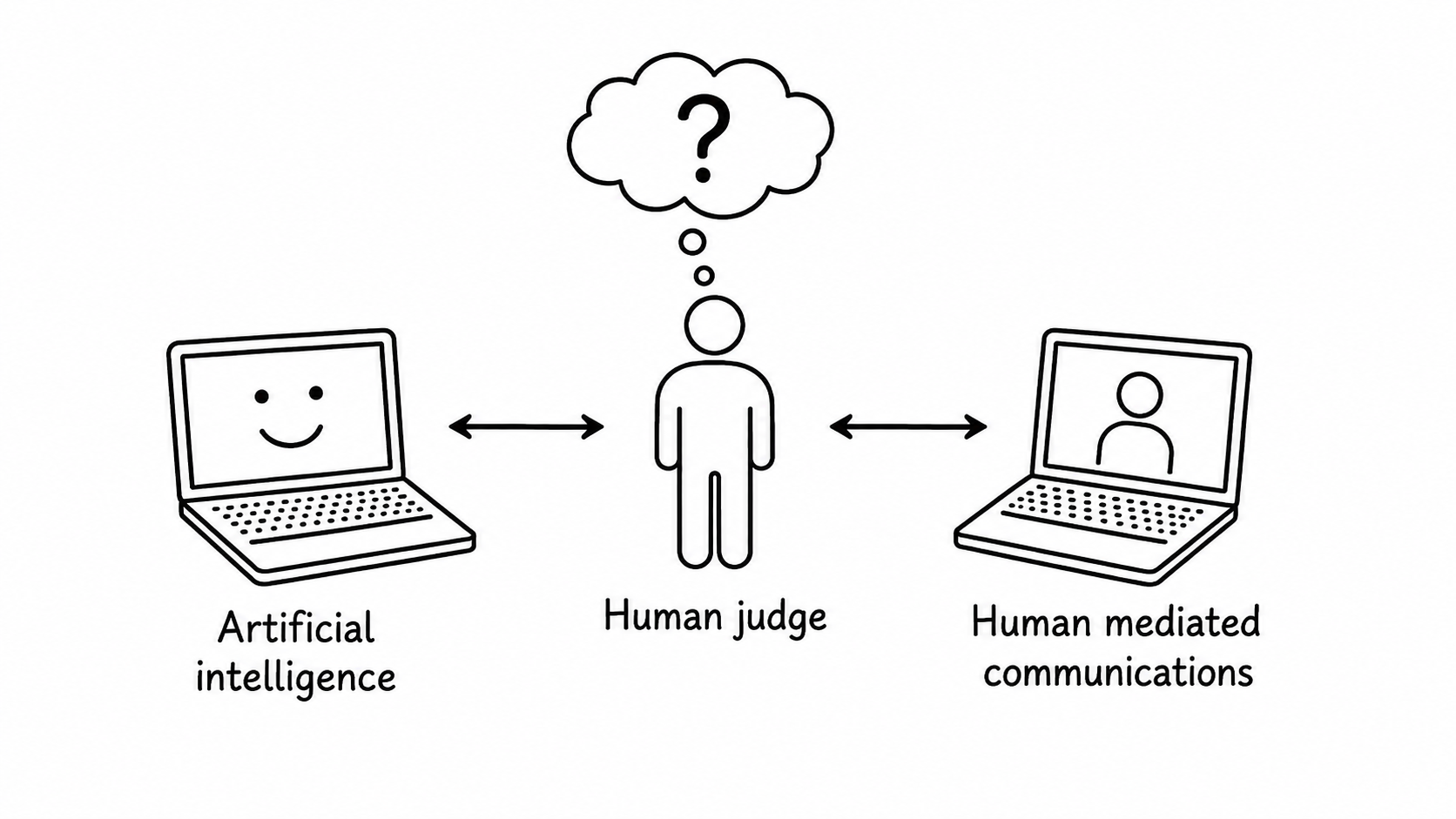
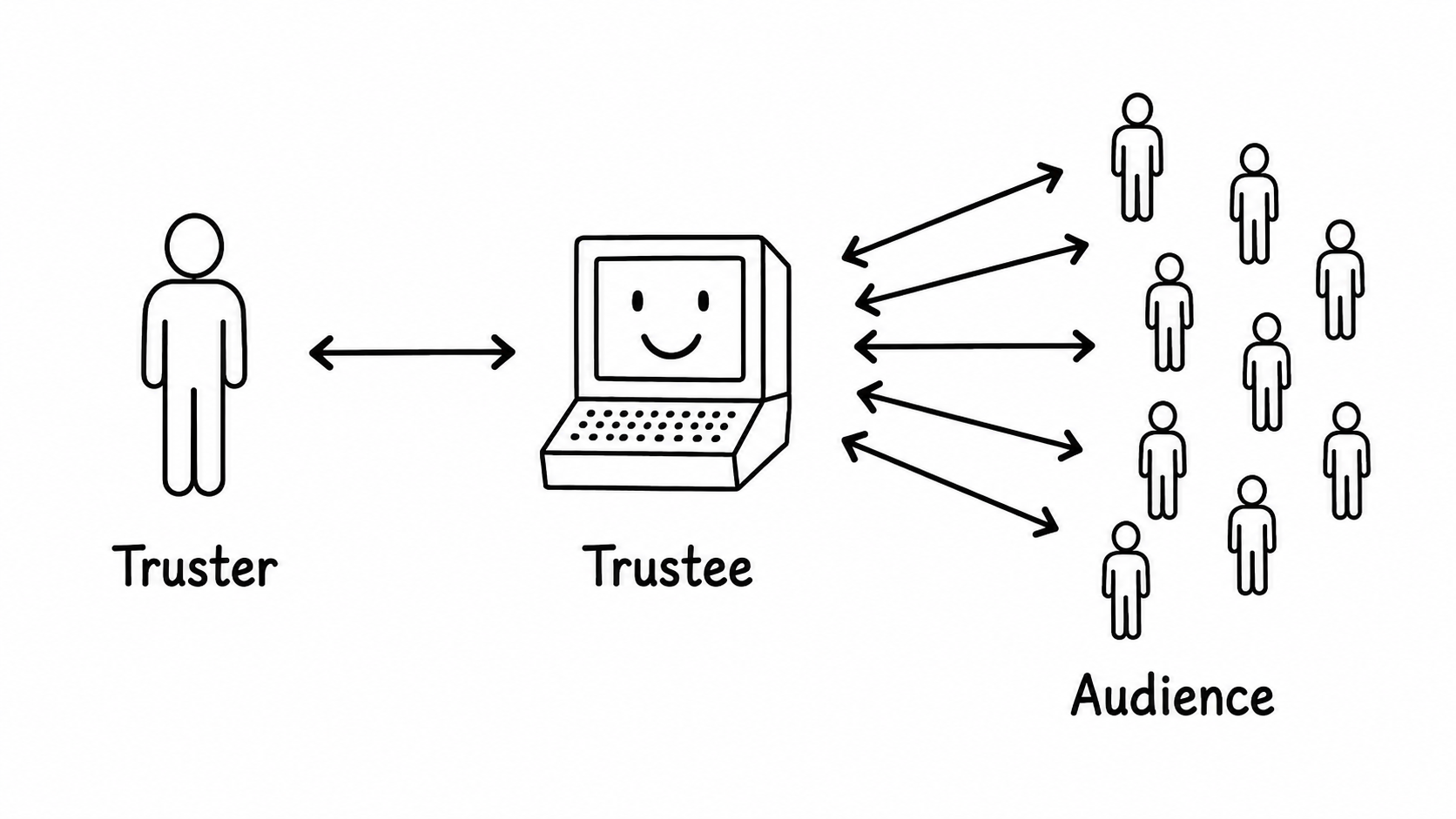
One of my academic contributions was fusing the principles of behavior change and persuasive psychology into a circular communication model that explains all the major behavior change principles as a system that’s intuitive and practical. It’s grounded in a two-way relationship between technology and audience, within a social context.
The relationship between users and technology can also be understood as the relationship between users and the source of that technology. “Source” is a term from media studies referring to the origin of a message. Think of it like an author: you may never have met them, but after reading their book you feel like you know them. That’s a source relationship.
Sources don’t have to be human. People form relationships with organizations, brands, and technology itself. Anything that can earn a reputation, and be trusted or distrusted, is functioning as a source. Sources can also carry personality.
Distrust is an absolute dealbreaker when it comes to influence. If a relationship isn’t authentic and honest at its foundation, no other behavior change tactic will do much. This is why I start training with source psychology, which intersects directly with the psychology of branding.
Oxytocin and the biological basis for emotional design
For some time, I’ve believed that oxytocin does more than shape human-to-human relationships, and that it also plays a significant role in human-computer interaction. Nobody has produced a convincing neurological explanation for the media equation because the science needed to crack it is only now starting to emerge.
Oxytocin is the neurotransmitter involved in human perception, emotion, motivation, and cognition, specifically for processes tied to social behavior. It supports our ability to recognize faces, focus on eyes, read other people’s emotions, feel attracted to others, share and cooperate, and feel loyalty.
The picture isn’t entirely positive. Oxytocin also appears to drive tribal us-versus-them instincts. Intranasal oxytocin spray increases in-group trust and cooperation, but also heightens out-group distrust and hostility. Research connects it to envy, jealousy, attachment anxiety, and the acute emotional pain of relationship breakups. Not emotional unpleasantness. The kind of pain that physically hurts.
For several years, I’ve believed the key to understanding our relationships with technology lies in a deeper understanding of oxytocin’s role in social attachment. There’s growing evidence of this, and a recent study on branding provides the strongest link yet.
Oxytocin shapes our relationships with brands
In 2015, a research team published a study examining oxytocin’s role in consumer-brand relationships. Their paper, “The neuropeptide oxytocin modulates consumer brand relationships,” looked at three levels of brand humanization.
The first was non-human brands: companies that use only logos and visual identity, such as IBM. The second was semi-human branding, pairing a logo with a person or mascot, such as Microsoft paired with Bill Gates or Apple as synonymous with Steve Jobs. The third was human brands, where the person is the brand, such as Oprah, Aristotle, or Kurzweil.
The finding was clear: the more humanized the brand, the more oxytocin shapes the relationship. Specifically, oxytocin influenced people’s emotional connection with brands, affecting feelings of intimacy, self-connection, commitment, satisfaction, trust, and loyalty.
The effect wasn’t uniform. Oxytocin boosted emotional connection in one group and reduced it in another. The first group, more socially oriented and more female-dominated, felt a deeper connection with humanized brands. The second group, more technical and male-skewed, reacted in the opposite direction. Humanized brands triggered less attachment, not more.
The study also found that after interacting with a favorite brand, subjects’ oxytocin levels rose, similar to what happens after looking at a picture of someone you love.

Oxytocin drives human-like emotions with technology
The branding findings extend directly to websites, apps, digital campaigns, and AI. The science hasn’t fully mapped oxytocin’s role in human-computer relationships, but the pattern is consistent enough to draw clear conclusions.
Generic, purely functional technology produces weak oxytocin effects. Ask a stranger for directions, or use a basic MP3 player, and you may appreciate the help or the function. But there’s not enough interaction for a relationship to form, and oxytocin’s social effects stay quiet.
That changes when technology is used regularly, behaves in human-like ways, and is backed by a well-known, trusted brand. Under those conditions, oxytocin begins operating the way it does in human relationships. It shapes trust, loyalty, and emotional connection at a level that goes well beyond rational product evaluation.
AI makes this dynamic more visible than any previous technology. Conversational AI systems have human-like traits by design. They respond, adapt, and in many implementations, remember. Users regularly report feeling understood, surprised, or even betrayed by them. These aren’t irrational responses. They’re predictable consequences of oxytocin-mediated social processing applied to interactive technology, exactly what Nass was documenting in the 1990s and 2000s. The technology has changed dramatically. The mechanism driving user emotion has not.
The more humanized a product, brand, or AI system, the more deeply oxytocin shapes the experience, and the greater the capacity to build products that are more enjoyable, more trusted, and longer lasting.

Why Apple customers are irrationally loyal
When a company masters the art of humanizing its brand and technology, the result can look like fanaticism. Few examples are more studied than Apple.
Apple’s customers don’t just buy its products. Many act as active brand advocates, with levels of trust, loyalty, and tribal attachment that product quality alone can’t fully explain. The hostility some Apple users direct toward Microsoft users maps closely onto the out-group distrust effects of oxytocin.
Apple operates as a semi-humanized brand. Steve Jobs was synonymous with Apple Inc., functioning as a human brand source. Its unified hardware and software create an integrated user experience across physical device, operating system, and application. That integration matters. It allows Apple to control the source effect across the entire product, without competing signals breaking the relationship.
Layered over that integration is interface design and language that embodies Nass’s insights on how people connect emotionally with technology. The result is a product that doesn’t just function well. It feels like a relationship.
Apple’s edge, beyond great products, is a consistent and deep understanding of how to humanize both brand and technology. The more we understand oxytocin’s role in human-to-human relationships, the more clearly we can see what drives human-to-technology relationships.
Emotional design strategies for tech designers
Customer satisfaction, trust, and loyalty are direct drivers of long-term profitability. That makes emotional design a practical concern, not an abstract one.
A few principles follow from everything above.
Start with the source. Define the relationship between your product and its users before anything else. Who or what is the source of your technology? What personality does it have? What does a healthy user relationship with it look like?
Humanize at the right level. The more human-like your brand and product, the more oxytocin shapes the relationship. That’s not automatically an advantage. A mismatch between humanization level and audience type can reduce connection rather than build it. Know your users first.
Build on authentic relationships. Oxytocin isn’t easily triggered through deception. Evolution closed that loophole. Oxytocin increases distrust toward threatening or dishonest actors, and it drives uncooperative behavior when trust is broken. You can’t manufacture it. You earn it through consistency, honesty, and genuine usefulness.
This holds for AI products as much as any other technology. Users forming emotional bonds with an AI system are running the same oxytocin-mediated social hardware they use with people. If the product behaves deceptively or inconsistently, the emotional backlash follows the same rules as any broken relationship.
The strategy is straightforward: build from an authentic source, and make sure the people and products that define your brand express themselves honestly in everything they do.
References
- Reeves, B., & Nass, C. (1996). The media equation: How people treat computers, television, and new media like real people. Cambridge, UK, 10(10), 19-36.
- Cugelman, B., Thelwall, M., & Dawes, P. L. (2009). Dimensions of web site credibility and their relation to active trust and behavioural impact.
- Cugelman, B., & Stibe, A. (2023). Interactive behavior change model (IBCM 8.0): theory and ontology. In International Conference on Mobile Web and Intelligent Information Systems (pp. 145-160). Cham: Springer Nature Switzerland.